Newsroom
June 15, 2026
Hinge CEO: Comfort Is Costing Us Connection
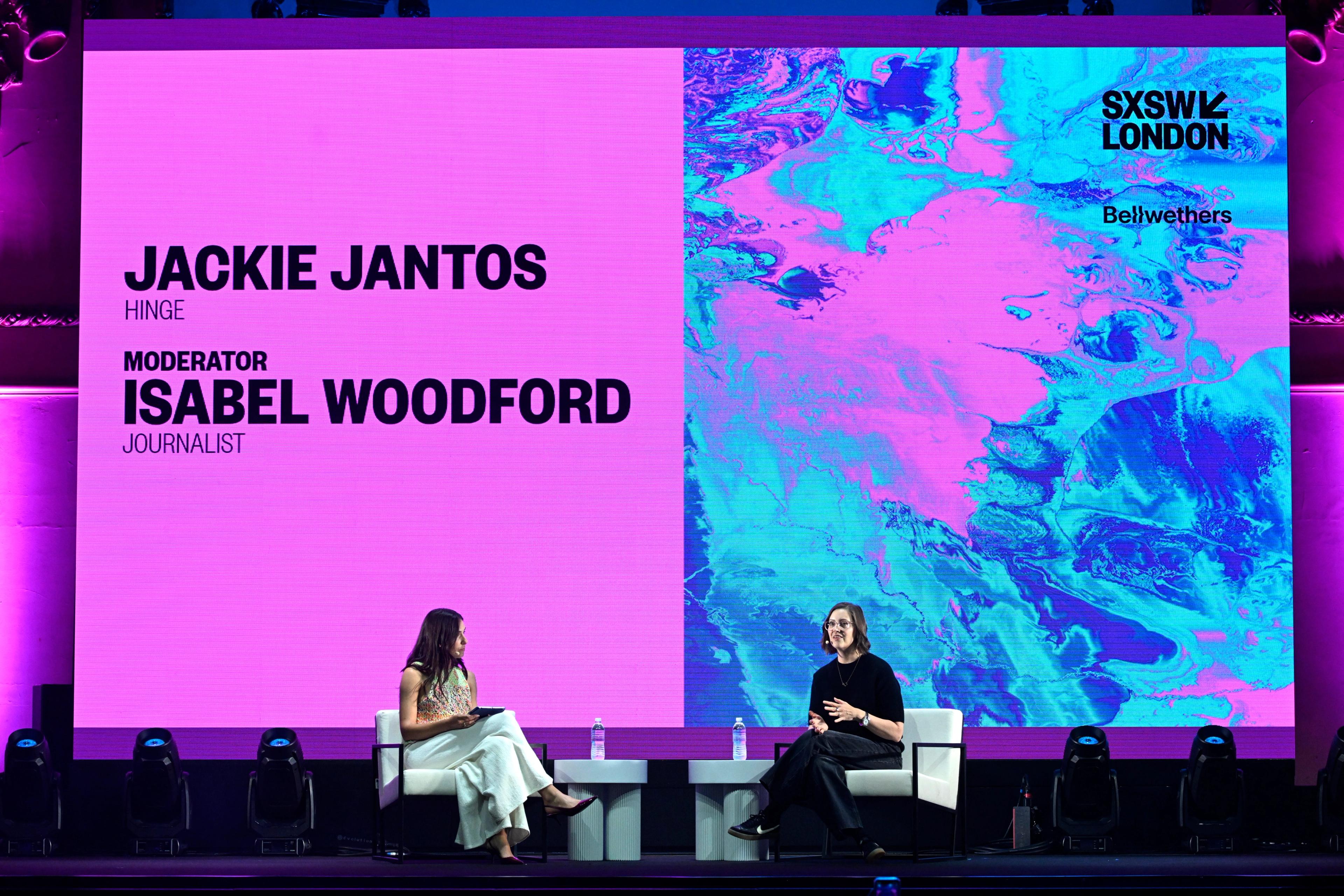
Technology is increasingly designed to remove discomfort. But some of the most meaningful experiences in life require effort, discomfort, and uncertainty.
Speaking at SXSW London in conversation with journalist Isabel Woodford (she/her), Hinge CEO Jackie Jantos (she/her) explored the tension between a world increasingly optimized for convenience and the human need for meaningful connection — and what it means for the technology industry at large.
When Discomfort Hits, We Reach for Our Phones
Today's young people are more isolated than any generation before them, spending an estimated 1,000 fewer hours a year connecting face-to-face than they did two decades ago. For Jackie, the reason is simple: when life feels uncomfortable, we reach for our phones instead of leaning into the moment.
"We see people walk into a space that feels uncomfortable or sit at home bored, and the first thing they do is turn to technology, which can be quite isolating. You can spend an hour scrolling, and when you put your phone down, you don't necessarily feel any different than you did before."
But those moments of uncertainty and silence are where confidence and real connection begin. In reaching for our phones, we're stepping away from the very experiences that shape us.
“I feel a responsibility to ask whether systems reinforce loneliness or help people move beyond it. We're always thinking about how to help people build the muscle and develop the strength required to connect with another human."
Designing for Real World Outcomes
As technology becomes increasingly embedded in daily life, Jackie believes leaders have a responsibility to think carefully about the outcomes their products create.
"What is the outcome you're trying to achieve for people, and what is the role of technology in helping achieve it?"
Jackie Jantos, CEO, Hinge (she/her)
It's a question she believes too few companies are asking. The best technology helps people engage more fully with life, connecting them to new places, community, and each other. But when a business model depends on attention, the incentive is to optimize for time spent rather than outcomes achieved.
"Dating apps as a category have done a bit of a disservice through product innovation. Hinge has tried to lead innovation with a focus on one outcome: helping people get to a great date."
At Hinge, that means encouraging vulnerability — building features that support people in taking the step into real-world interaction rather than avoiding it.
Take Date Ideas, a recently launched feature that lets daters signal their preferred first-date activities on their profile, helping matches move past the messaging stage and into real plans. During testing, 54% of daters said it made them feel more confident asking someone out.
While technology has made many parts of life easier, building meaningful connection requires people to take risks and show up authentically even when it feels uncomfortable. Those moments are often the very experiences that help people build confidence and resilience.
AI Should Support, Not Substitute, Connection
Jackie sees real value in AI — smarter matching, stronger trust and safety systems, tools that help people show up more authentically. But she draws a clear line between AI that supports human connection and AI that replaces it.
One example: a young woman in London told her she uses ChatGPT for conversations that feel too heavy to have with friends, processing difficult emotions with a system that isn’t known for pushing back.
"AI is deeply affirming. It's always there. It tends to agree with you unless you explicitly ask it not to. By contrast, talking to a friend introduces different perspectives, questions, and challenges. It's a richer experience. In that sense, I think some uses of AI are problematic because they don't help people develop the interpersonal muscles they need."
For Jackie, the goal is to build technology that helps people engage more fully with life rather than retreat from it.
The Bottom Line: “I want people to care about what they're building for the world and to ask harder questions of themselves: to what end, and at what cost?”